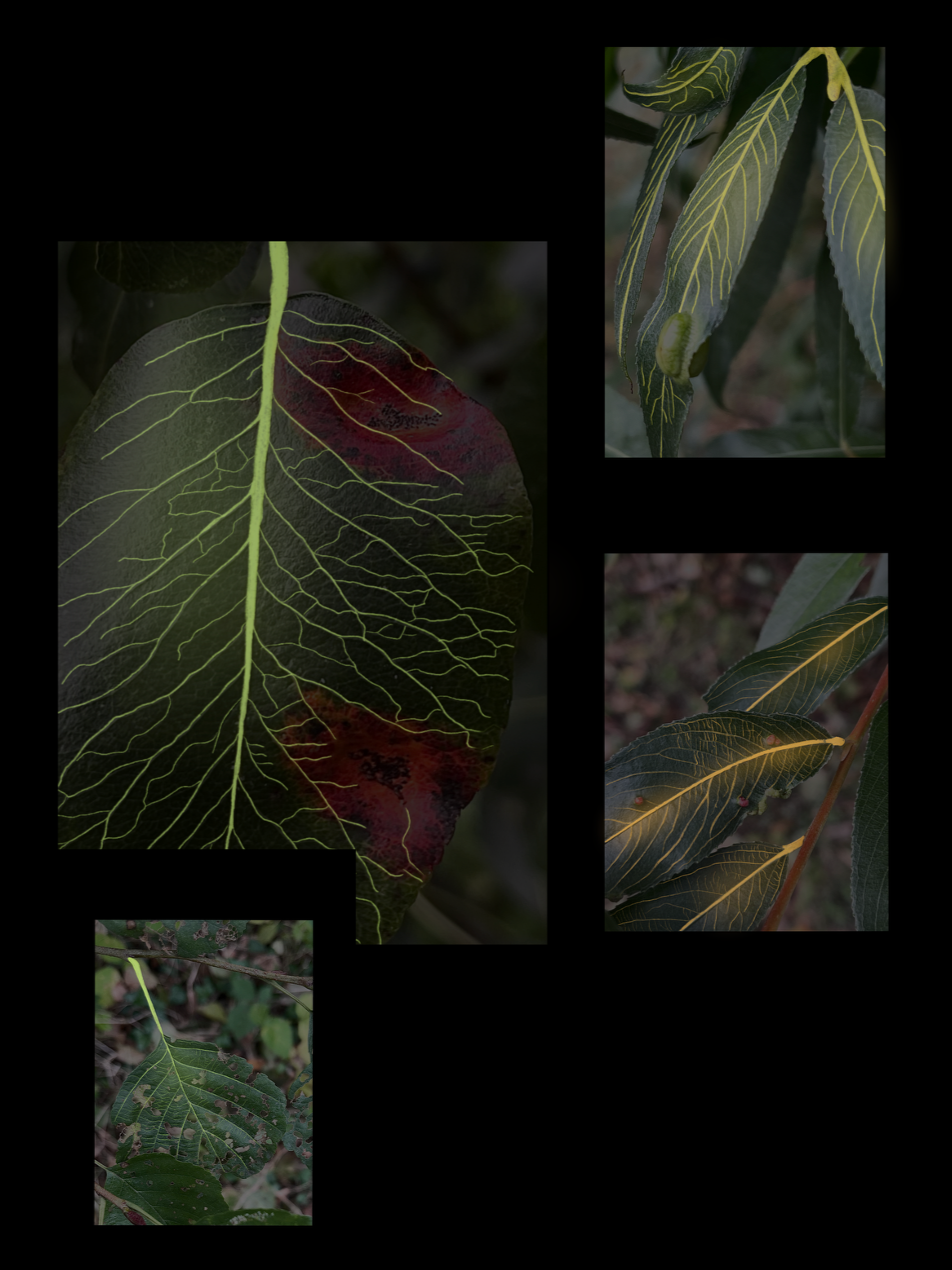
What continues to function even when something appears damaged?
This project began with collectiog images - simple observations from the surrounding of the Kleine Are in Boxtel. I photographed insects, tree trunks, water hoses and leaves. Over time, the leaves started to stand out. Many of the showed signs of change: small holes, red sports, swollen textures, broken edges. At first, these signs looked like damage or disease.
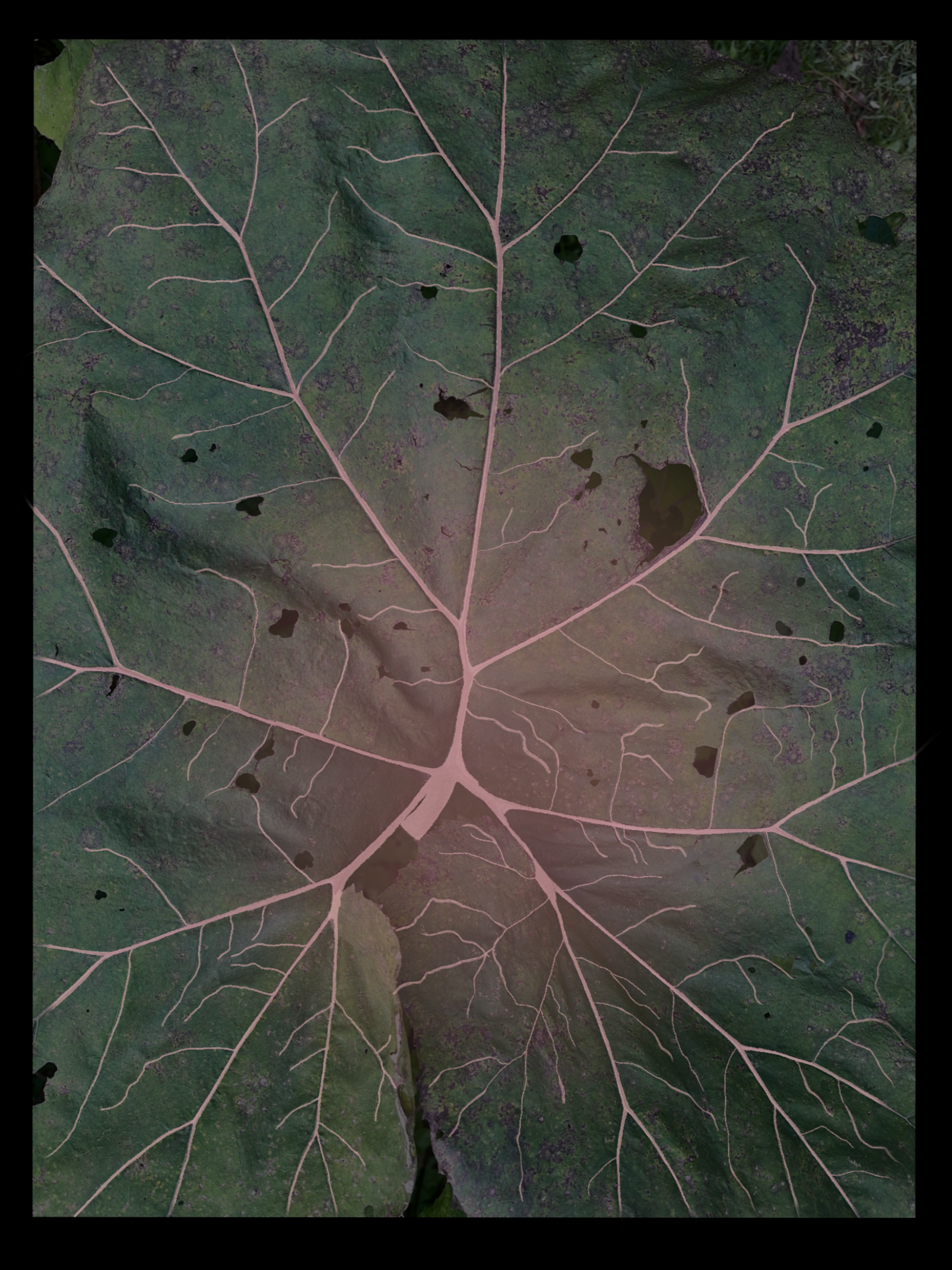
But even with visible marks of decay, they remained part of a working system. While still hanging on the tree, they continued to transport water and nutrients through their thin veins. This raised the question for me: What continues to function even when something appears damaged?
In medicine, angiography is used to make the inner world of the body visible by injecting dye into the veins. It helps to identify blockages and irregularities. I wanted to reverse this idea. Instead of looking to find problems, I was finding something that still works - to see resilience rather then failure.
The veins of a leaf mirror the networks within our own bodies. Both are systems of flow and interdependence. Even when part of the structure is affected, the larger system continues to adapt and survive.
In the sector of health, there is often a focus on what is lacking or broken. Yet these leaves show another perspective: that vulnerability and function can exist together. It means recognizing what is still active, even if something looks imperfect.