I travel by train quite a lot. Especially over the Christmas, I spent many hours moving from one place to another. No matter where I went, I could observe people whose gazes were fixed on screens of various sizes. I am usually part of this group myself - disappearing into an infinite digital world and often missing what is literally passing by in the physical world outside: beautiful landscapes that bring me back into the present moment, that fill me with wonder and evoke a feeling of joy that I can sense as a warm and tingling in my chest.
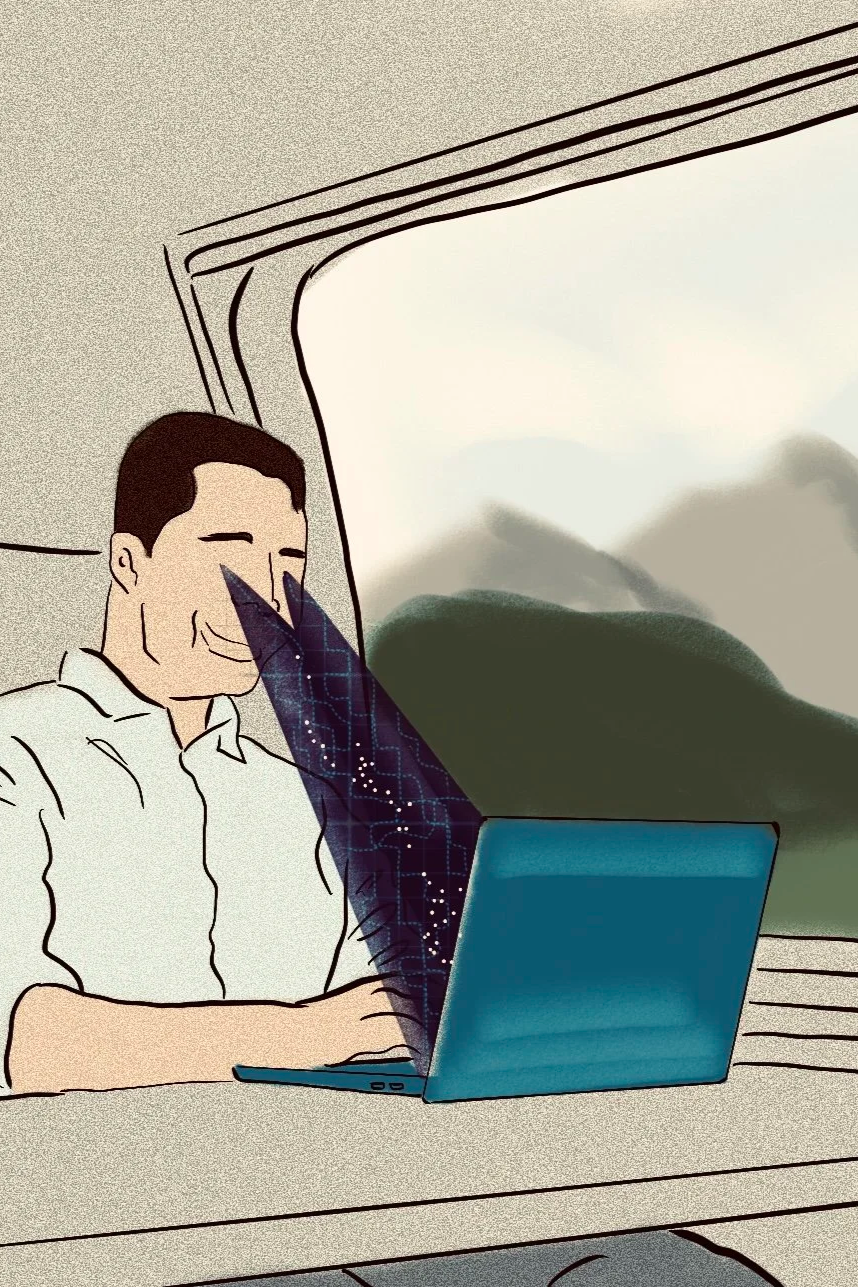
Passing the physical world in the train
The long strechtches of time we spend in front of our screens are by no means „unused" time. The digital sphere allows us to order nearly anything and have it delivered directly to our doorstep. Thinking about a new outfit? With just one tap on one of thousands of online shops, a new shirt will soon be in your hands. Social media platforms make it effortless to stay constantly connected with people around the world. The achievement of recent decades is remarkable and brings with it advantages that once seemed unimaginable. Yet it is not without reason that numerous books promote „digital minimalism" encouraging us to put down our smartphones and to turn toward other sensory stimuli [1]. The world around us has become incredibly convenient and has reduced the use of our physical bodies to a minimum [2]. And by this I do not only mean the reduction of physical activity or everyday movement, which negatively affects our health [3], but also the many spontaneous, small interactions that are increasingly disappearing as a result of digital progress.
“The creators of the animated movie WALL-E have imagined a fictional future in this regard. How far away are we from a world like this? ”
I am aware that these lines paint a rather dystopian picture of our reality. During this semester however, I encountered projects that combine art and technology to create experiences that require a deeper engagement with the self, the body, other people and our environment. Drawing on this knowledge, and as someone who is passionate about movement I wanted to explore how Technologies can be used not only to enable sensory experiences with our whole body, but perhaps even to intensify them.
It seems to me that this could offer a counterbalance to the developments described above. The media artist and performer Luna Maurer has taken an initial step in this direction with her manifesto Designing Friction. In it, she states: „technology should create environments and situations in which we can truly connect with each other, as well as with the unknown, the uncontrolled, with all senses, all elements, all emotions [4]. Why these diverse experiences that make us „human" are so important is vividly described by neuroscientist Lisa Feldman Barett in her book “How Emotions are Made”.
According to Barrett, we exist in constant interaction with our environment The environment influences how we think, fee. and behave, while we in return have a direc impact on our surroundings. Through all of our senses, the brain receives information about what is happening in the external world as well as within our bodies. With every experience we have, networks are formed in our brain. This phenomenon is known as neuroplasticity and enables us to learn new things throughout our entire lives. In order to build strong neurol connections, we need to nourish our bodies with a variety of „stimuli“. What initially feels challenging can, through repeated practice, become automatic. Making mistakes and starting over is part of this process, as it is precisely in these moments that particularly large amounts of neurotransmitters are released in the brain to form new synapses [5].
This is exactly what Luna Maurer calls for: using technologies that engage the full spectrum of human experiences, both uncomfortable and pleasant. Every experience is linked to a bodily sensation. Attentively perceiving these sensations can help us navigate through life.
“Every experience is linked to a bodily sensation. Attentively perceiving these sensations can help us navigate through life. ”
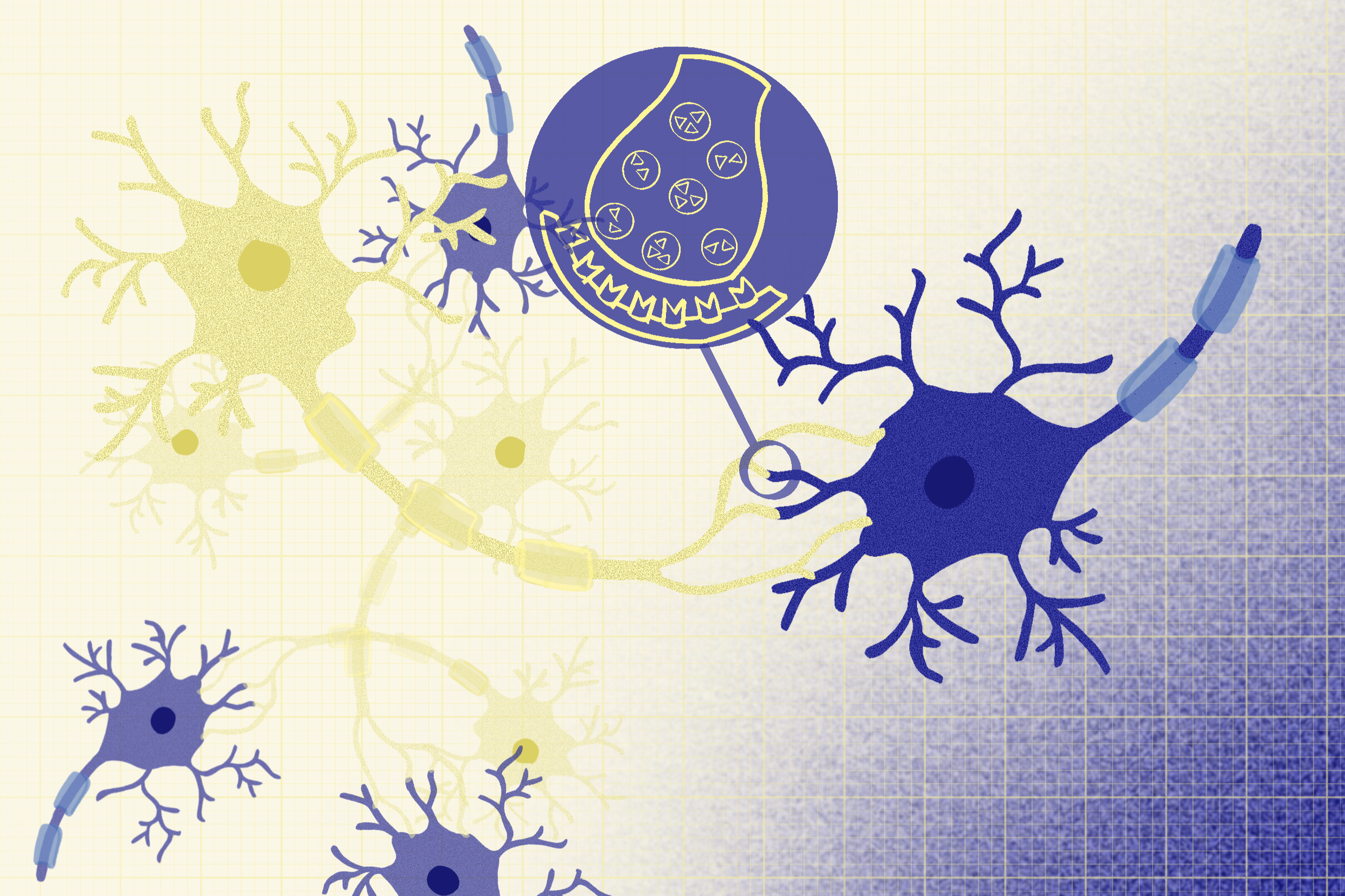
The function of a synapse
This brief excursion into the biology of our brain makes it clear that the digital minimalism is not without justification. But how then, can we make use of technology?
The range of projects that address this question for therapeutic or artistic purposes is vast. Without claiming to know more than a fraction of them, Room without walls by the performance collective LIGNA is one project that incorporates the aspects mentioned above. Equipped with headphones, the audience embarks on a journey guided by children from Frankfurt, São Paulo, Beirut and La Union. Without ever having met in person. these children create a shared experiential space in which movement, listening and mutual learning take place [6]. Participants are invited to move, to dance and to explore places - not digitally replaced, but initiated. Allowing spontaneous dancing like this can create opportunities for self-healing and growth. Free dancing can help children reduce anxiety and build resilience [7].
Marcel van Brakel and Mark Meeuwenoord take this idea one step further with Symbiosis. Symbiosis is a speculative, multisensory VR installation set in a posthuman future. In this world humans, animals, technological, and artificial life forms exist in a radically symbiotic relationship in which resources, bodies, and information are shared. Participants become part of this future by inhabiting different posthuman or non-human roles. Through VR, bodily movement, and specialized haptic wearables, they experience new forms of corporeality and coexistence [8]
In this sense, the future does not have to be described as a dystopian loss of bodily presence. It can be a future in which digital and physical realities productively intertwine. Nevertheless, project such as these must always be critically examined with regard to accessibility, scalability and cost. While Symbiosis presents greater barriers in this respect, Room without walls by LIGNA can be implemented relatively easily and flexibly in a variety of locations.
For me, as a health designer, the work of Kristina Höök is particularly relevant -as-an outlook for my future, In Designing with the body, she argues for a shift in interaction design toward a more experiential, sensory and embodied approach. The so-called soma design is a design process that brings the body and movement back into a field that has long been dominated by language, logic, and efficiency. As an alternative, it promotes a slower, more reflective way of designing. It places human experience, well-being and values at its center. Particularly insightful to me is the assumption that engaging with ones own soma can lead to a deeper sense of empathy for other bodies. Those who learn to consciously perceive their own bodily experience also develop a more refined sensitivity to the diverse needs, abilities, and limitations of others. This sensitivity is crucial if design is to be genuinely embraced by those for whom it is intended [9].
This perspective is especially significant in the context of inclusion. In What Can a body Do? How We Meet the Built World, Sara Hendren raises the fundamental question of whom our environment is actually designed for, pointing out that it is often oriented toward an imagined „average"-body that does not, in reality, exist [10].
As a health scientist, I myself worked for a long time with data and population-level averages. In doing so, it is easy to lose sight of the fact that such abstractions oft fail to adequately reflect the concrete experiences, needs, and lived realities of individual bodies.
(1) Newport, C. (2019). Digital Minimalism: Choosing a Focused Life in a Noisy World. Portfolio/Penguin.
(2) Chan, K. T. (2022). Emergence of the “digitalized self” in the age of digitalization. Computers in Human Behavior Reports, 6, 100191. https://doi.org/10.1016/j.chbr.2022.100191
(3) Woessner, M. N., Tacey, A., Levinger-Limor, A., Parker, A. G., Levinger, P., & Levinger, I. (2021). The evolution of technology and physical inactivity: The good, the bad, and the way forward. Frontiers in Public Health, 9, 655491. https://doi.org/10.3389/fpubh.2021.655491
(4) Maurer, L. (n.d.). Designing Friction. https://designingfriction.com (accessed December 29, 2025)
(5) Barrett, L. F. (2017). How Emotions Are Made: The Secret Life of the Brain. Houghton Mifflin Harcourt.
(6) LIGNA. (2025). A Room Without Walls. https://www.ligna.org/2025/05/a-room-without-walls/ (accessed December 29, 2025).
(7) Tortora, S. (2019). Children are born to dance! Pediatric medical dance/movement therapy: The view from integrative pediatric oncology. Children, 6(14), 1–27
(8) Polymorf & Studio Biarritz. (2021). Symbiosis [Performative, multi-user, multisensory VR installation]. https://www.polymorf.nl/interaction/symbiosis/ (accessed January 3, 2026)
(9) Höök, K. (2018). Designing with the Body: Somaesthetic Interaction Design. MIT Press.
(10) Hendren, S. (2020). What Can a Body Do? How We Meet the Built World. Riverhead Books.
